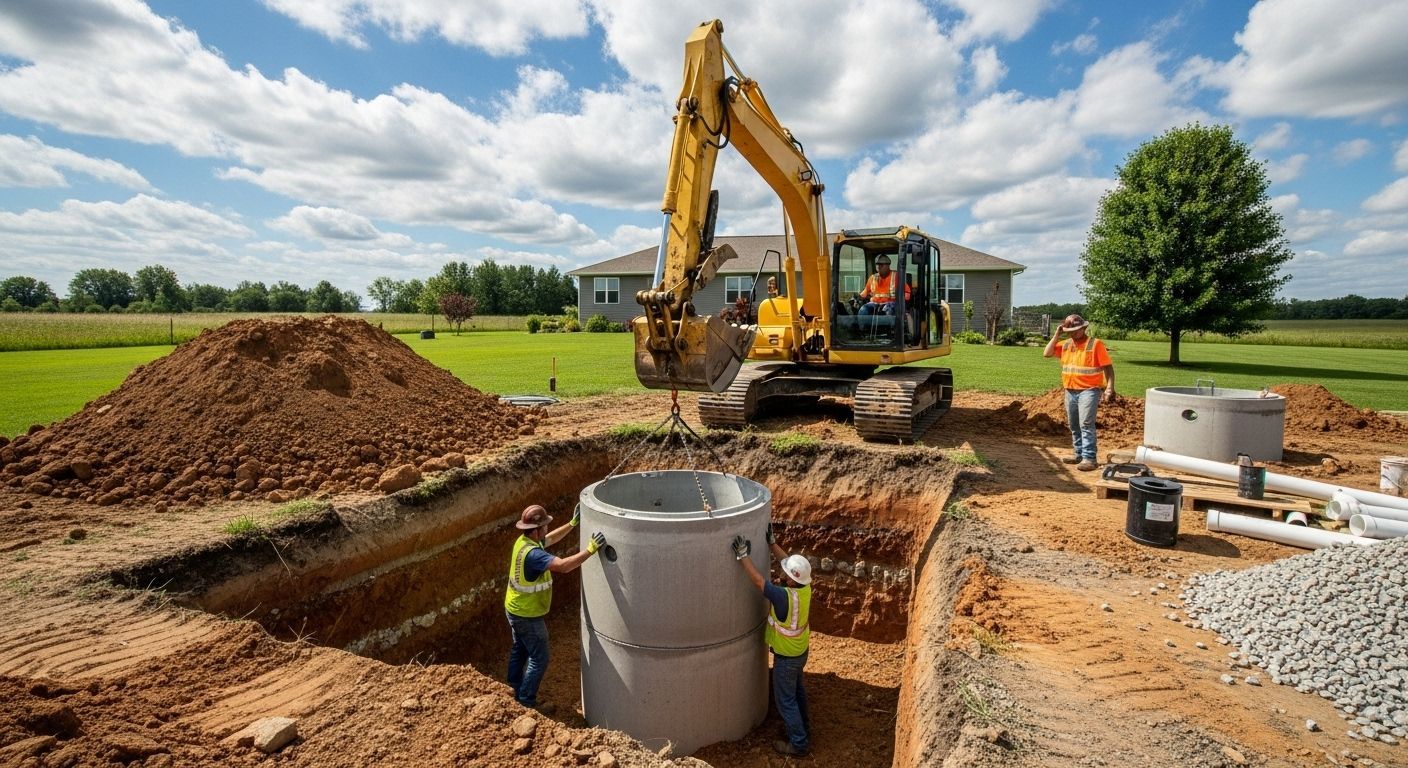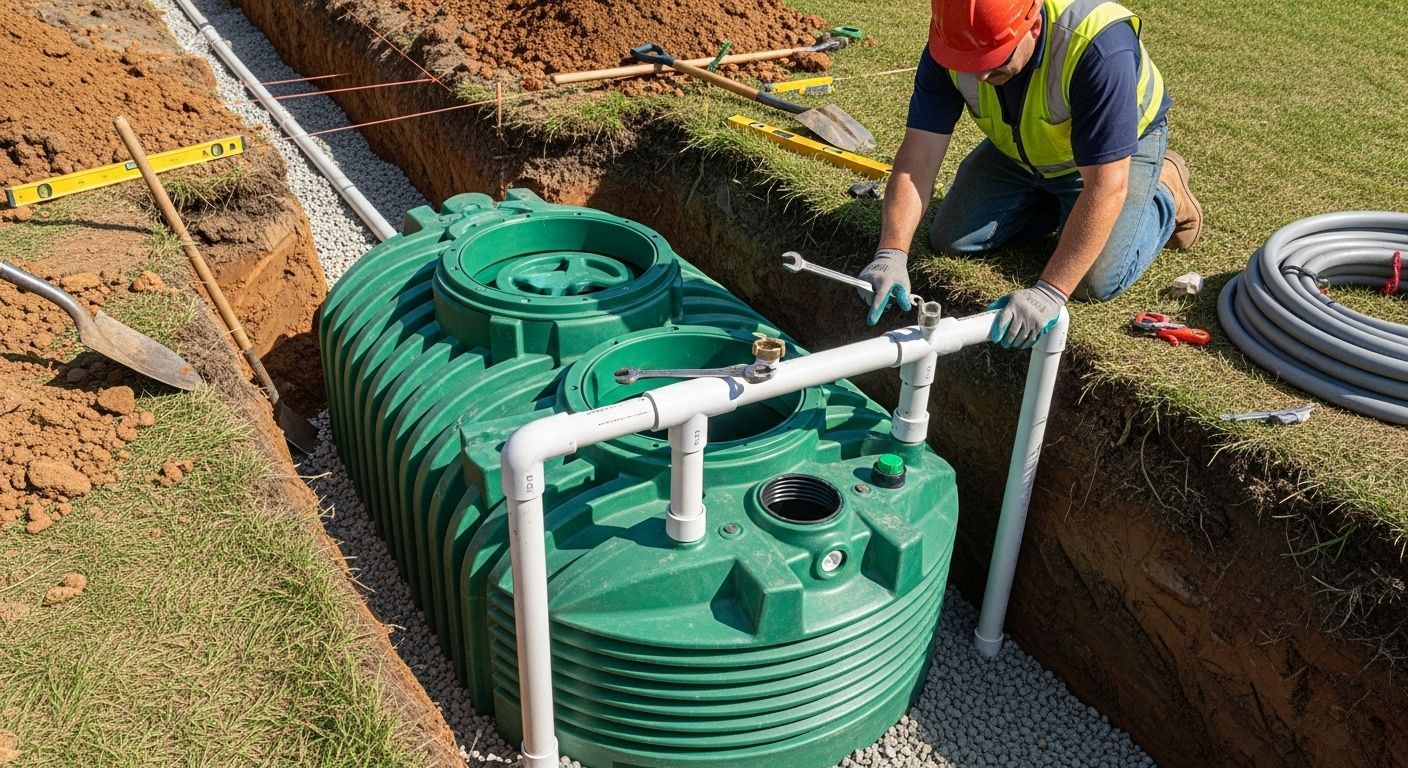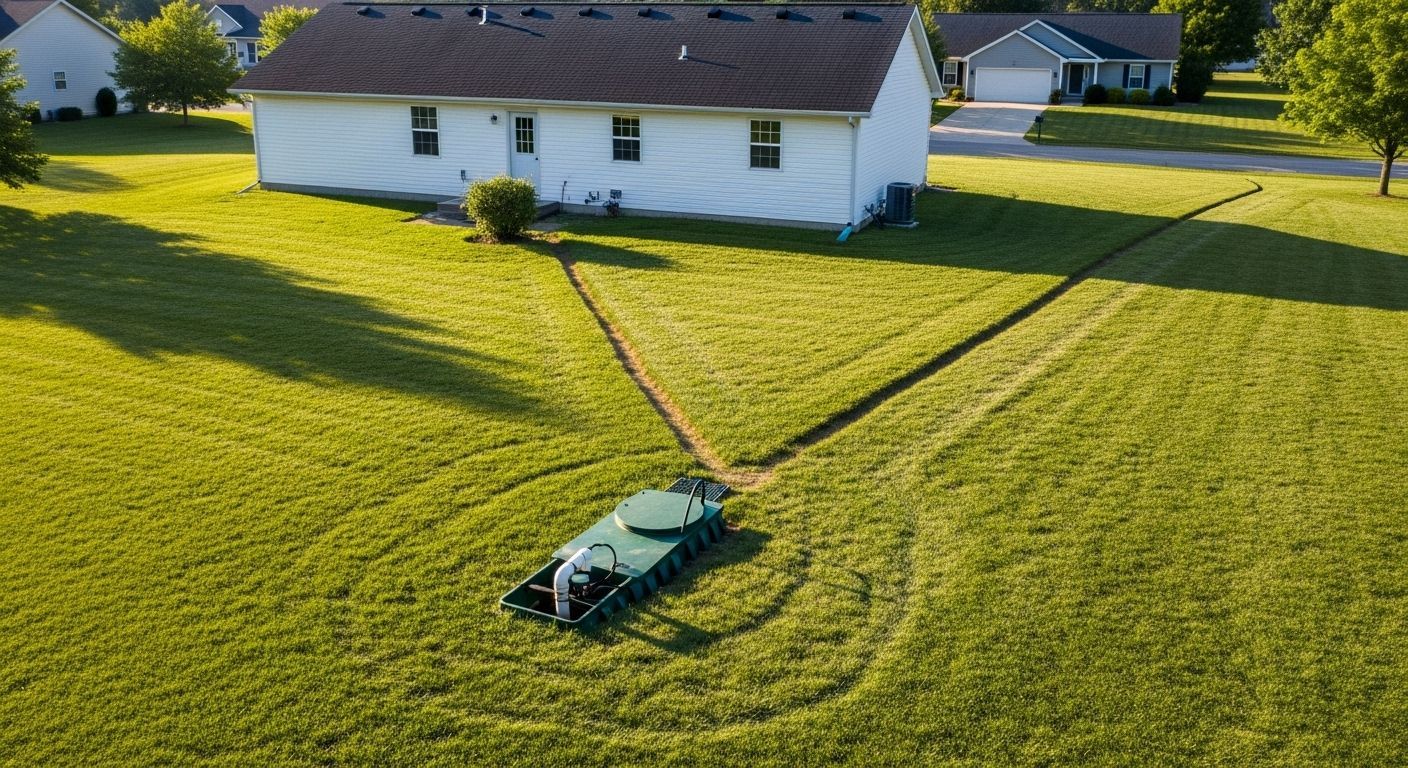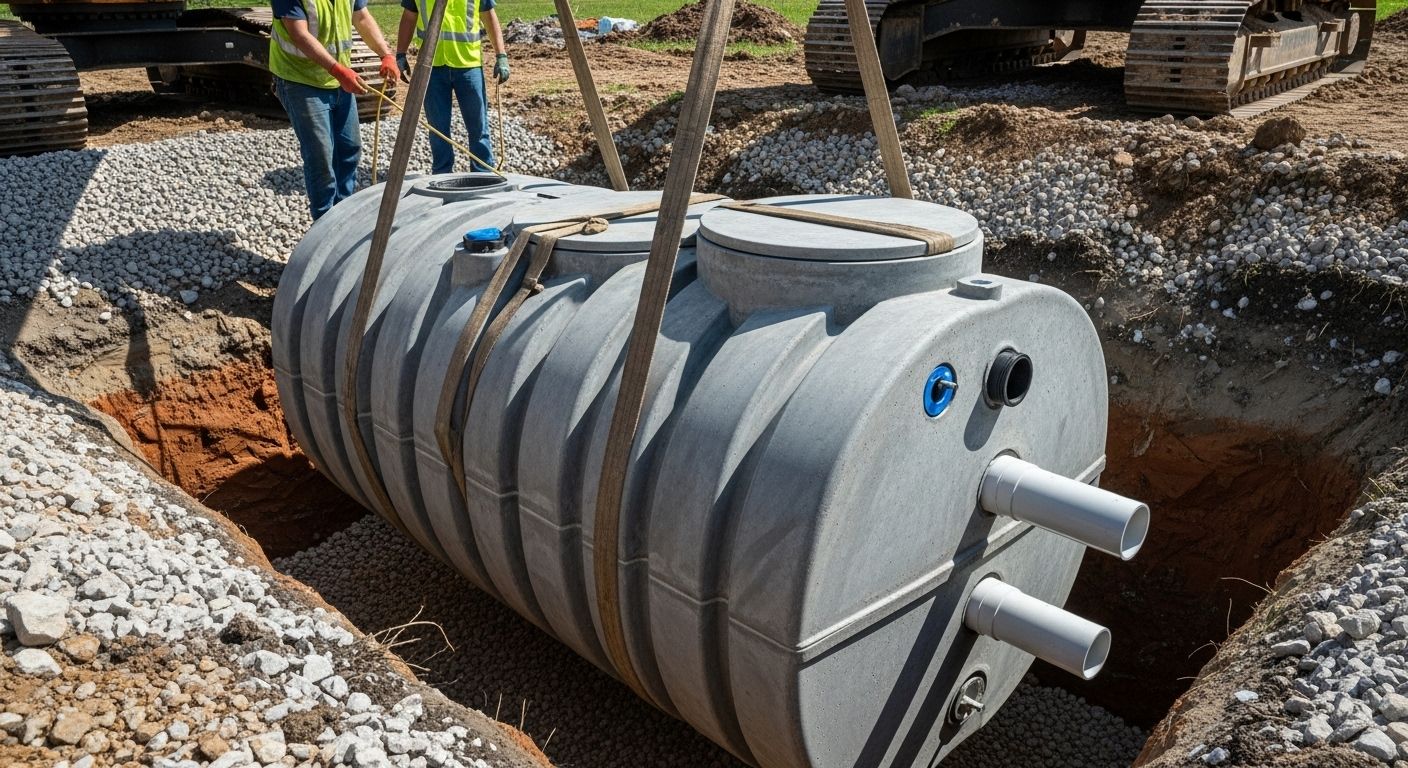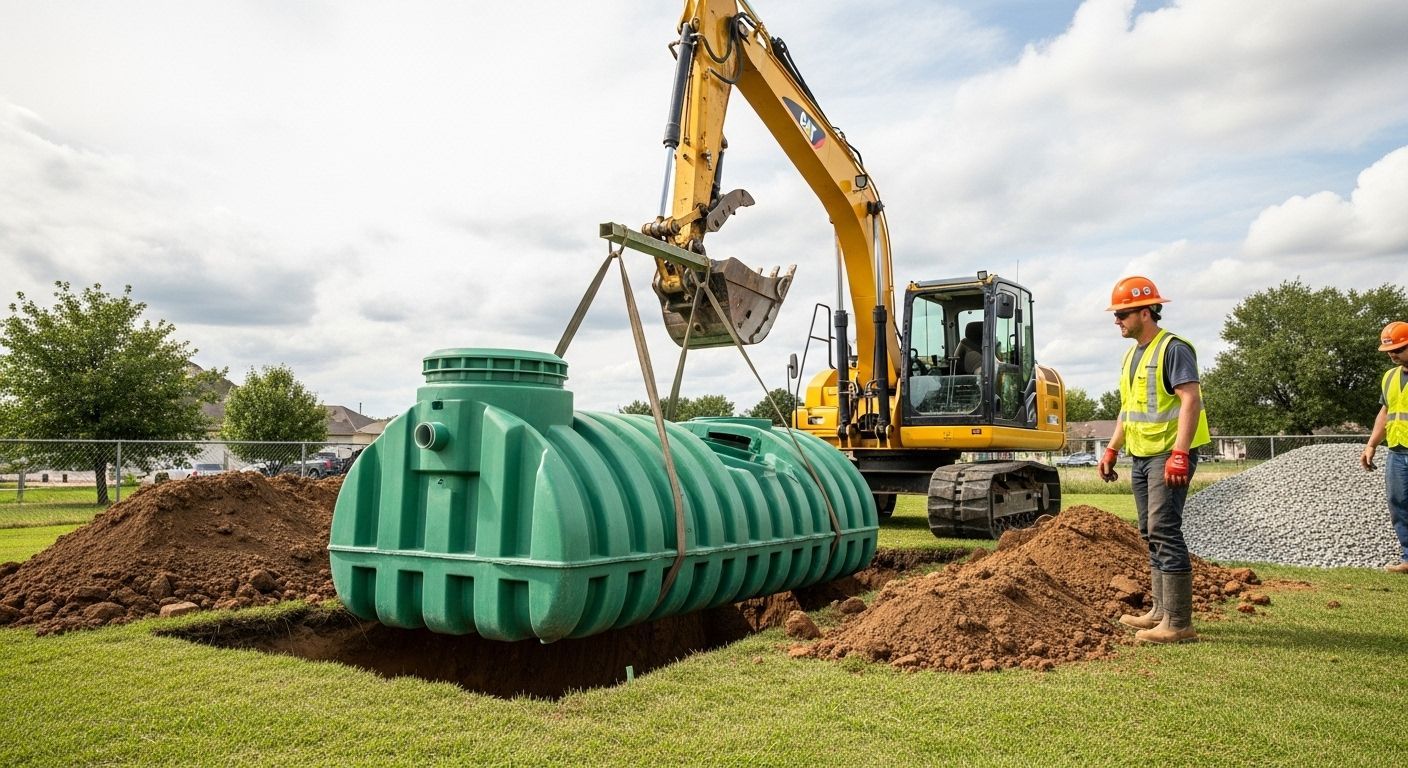
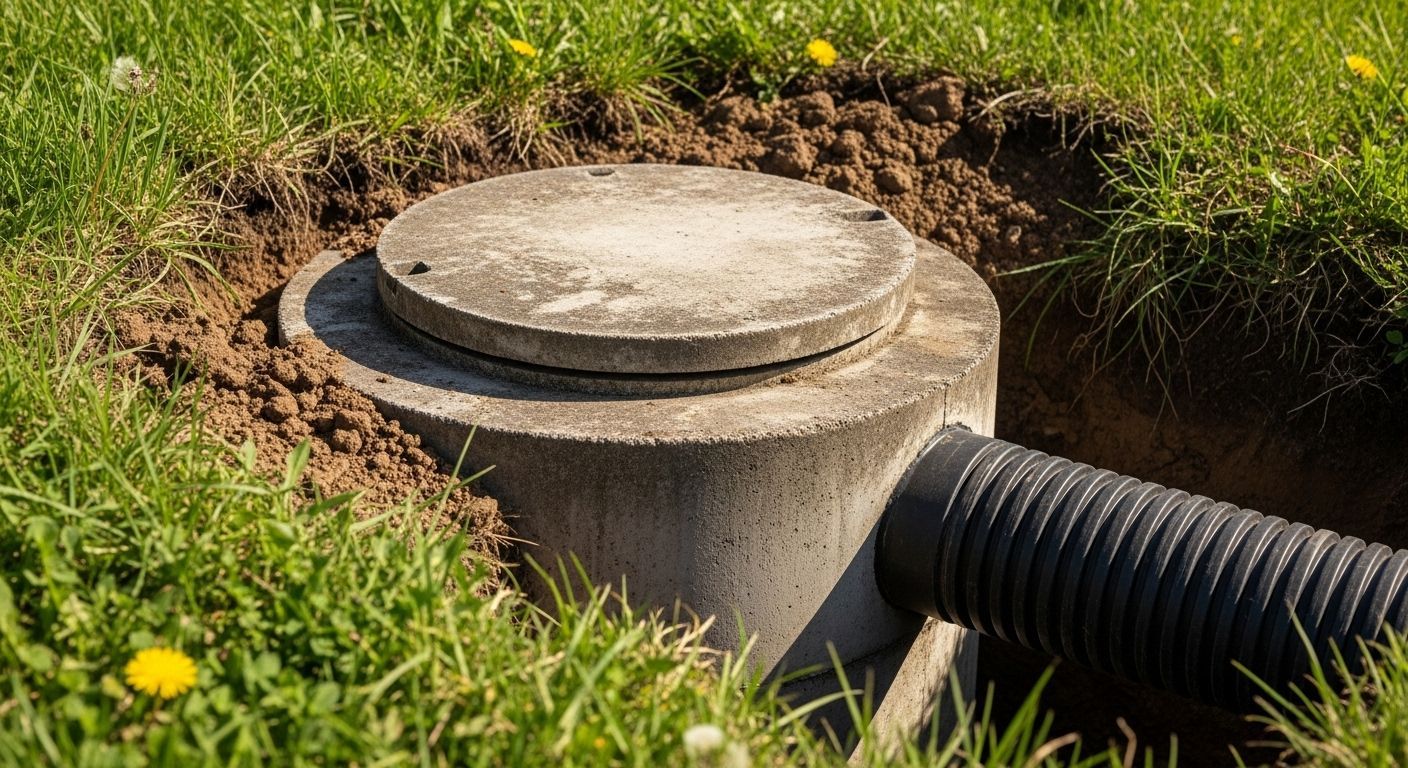
A traditional anaerobic septic system is the type most people picture. Wastewater flows from the house into a buried septic tank where solids settle at the bottom and bacteria begin breaking everything down naturally. From there, partially treated water moves into a drain field where the soil finishes filtering it.
These systems are popular because they’re simple. Fewer moving parts usually means lower installation costs and less maintenance. In rural areas with enough land and suitable soil conditions, anaerobic systems often work perfectly well for decades.
Aerobic systems are more advanced. They still collect wastewater, but they introduce oxygen into the treatment process using an aerator or air pump. That extra oxygen encourages different kinds of bacteria that break down waste faster and more thoroughly than anaerobic bacteria can.
If you’re comparing the aerobic vs anaerobic septic system difference in real-world terms, aerobic systems produce cleaner wastewater. That’s one reason they’re often used on smaller lots, properties with poor soil drainage, or environmentally sensitive areas where stricter treatment standards apply.
Because aerobic systems treat water more aggressively, the discharged water is generally cleaner before it enters the drain field or secondary treatment area. In some cases, treated water may even be used for limited surface irrigation depending on local regulations.