How to Find Your Septic Tank If You Don't Know Where It Is

If you've never needed to locate your septic tank before, the first time usually comes at the worst possible moment — a slow drain, a soggy patch of yard, or a pumping company showing up and asking where to start digging. Knowing how to find your septic tank location before that situation arises saves time, money, and the particular stress of problem-solving under pressure.

The good news is that for most properties, there are three or four reliable ways to track it down — and you probably won't need all of them.

Our Services →

Finding Your Septic Tank: A Practical Guide for Homeowners

Start with Records


The easiest path is paper. When a septic system is installed, the county or local health department typically requires a permit and a system diagram — called an "as-built" drawing — that shows the tank location relative to the house, the size of the tank, and the drain field layout. These records are usually on file with your county health department or environmental services office, and many counties have made them searchable online.


If your property has changed hands, check closing documents. Sellers are generally required to disclose the location of a septic system, and a survey or inspection report from a previous sale may have it marked. Home inspection reports sometimes include it too, especially if the inspector tested the system.

If the house is older — pre-1970s in many areas — records may be incomplete or nonexistent. That's when you move on to the physical approach.
estimated_quoteArtboard 3

Get a Free Quote

Contact Us

Septic Tank Repair, System Repair & Drain Field Solutions

Satisfied Clients

quotes2Artboard 2

Follow the Pipe from the House

Every septic system starts with a pipe leaving the house, usually from the basement, crawl space, or utility area near the main drain cleanout. Find where that pipe exits the foundation — it's typically a 4-inch PVC or cast iron pipe — and note which direction it's heading. The tank will be somewhere along that line, almost always within 10 to 25 feet of the house, though some older systems are farther out.

Once you've got a direction, you can use a thin metal probe rod (a soil probe or even a long screwdriver) to poke into the ground along that line, feeling for the tank lid or concrete walls. The tank is usually 1 to 3 feet underground. When you hit something solid and hollow-sounding, you've found it.

A plumber's snake with a locator transmitter is a more precise version of this approach. You feed the snake into the cleanout, push it toward the tank, and use a handheld receiver to track the signal above ground. Many plumbers offer this as a service if you'd rather not do it yourself.


Look for Physical Clues in the Yard

The yard itself often tells you where to look, if you know what you're reading. A few things that point toward tank location:

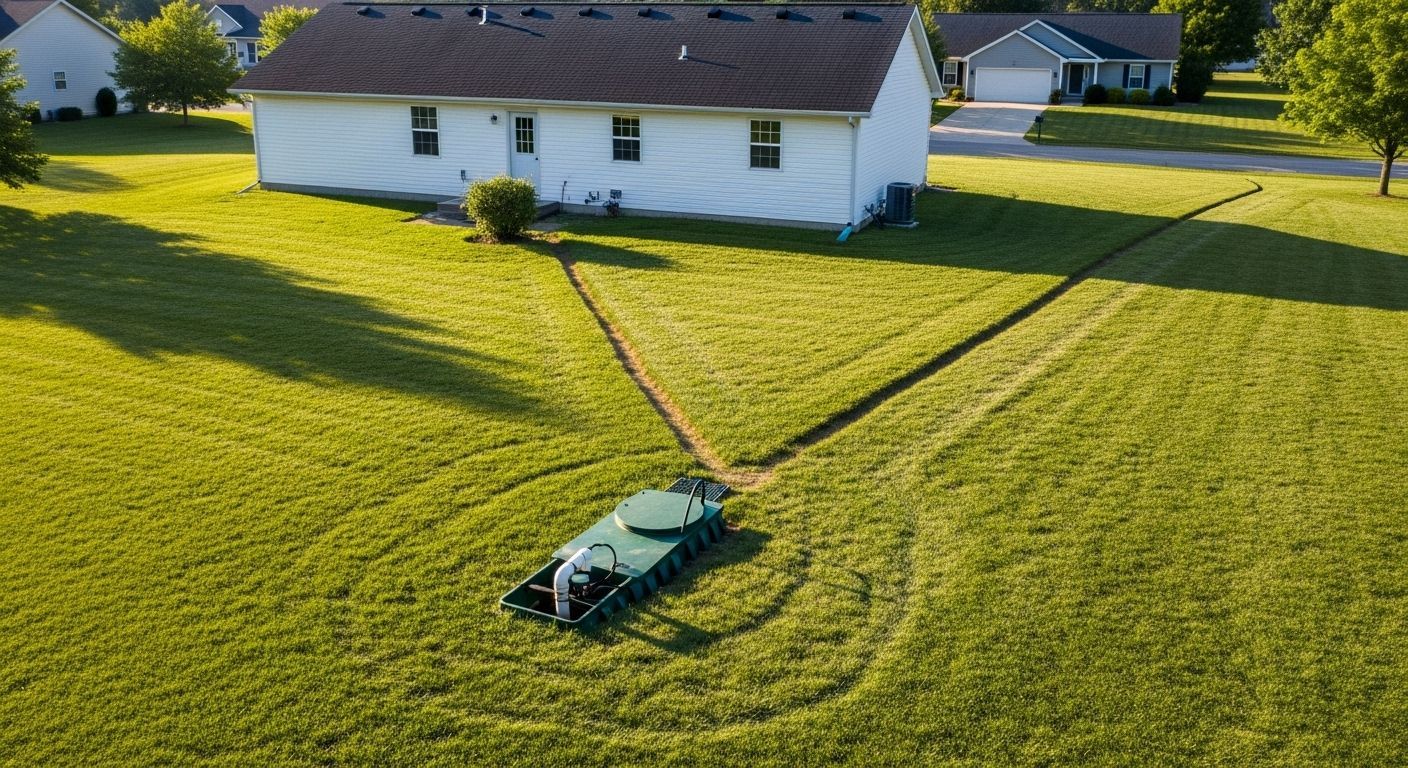
Slightly raised or sunken ground in a roughly rectangular shape. The tank was buried after excavation, and over time the soil settles differently over a disturbed area than it does in undisturbed ground.

Grass that grows differently. Lush, green grass over the drain field is common — the system is essentially fertilizing that area. Over the tank itself, growth may be slightly different in texture or color compared to surrounding turf.

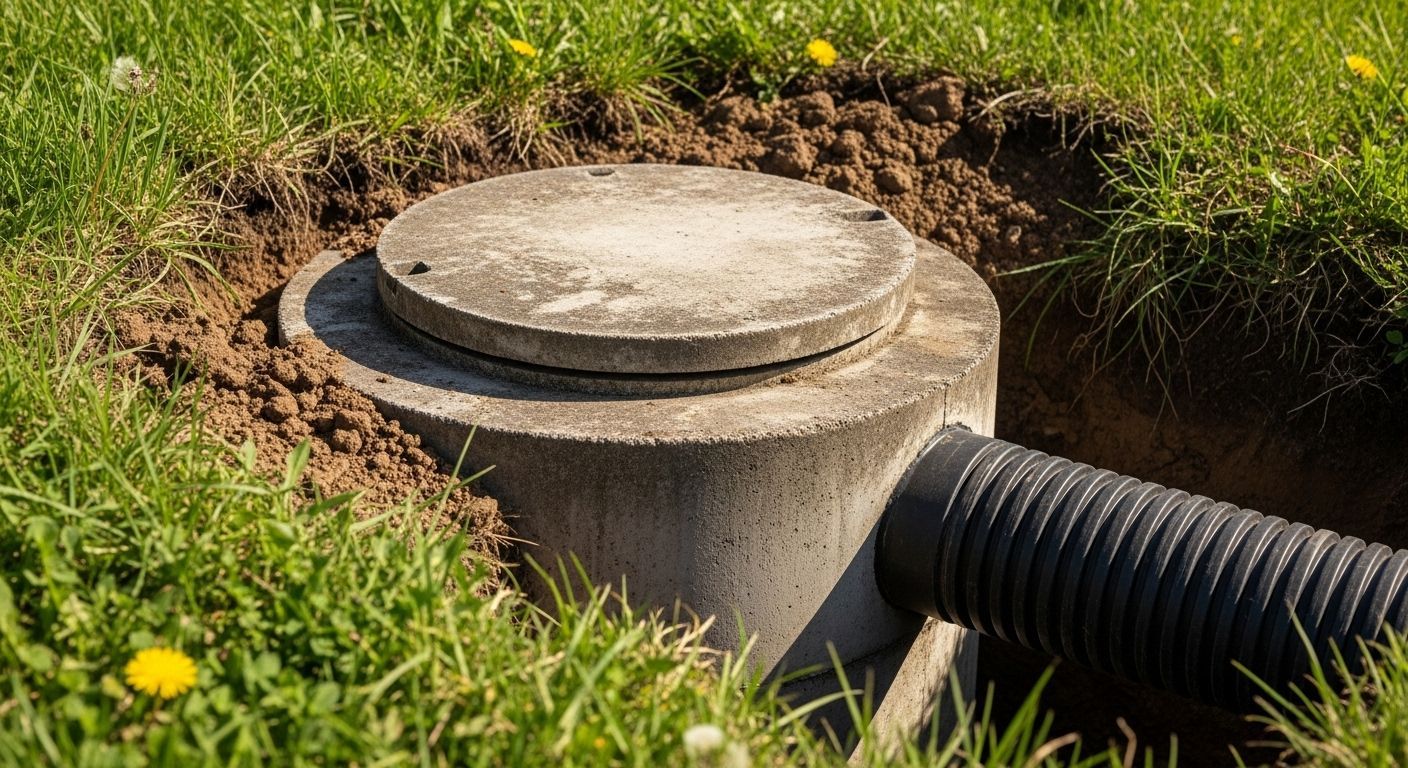
Old access risers or concrete lids that were never extended to grade. On older systems especially, you'll sometimes spot a concrete cap just barely visible at or near the soil surface.

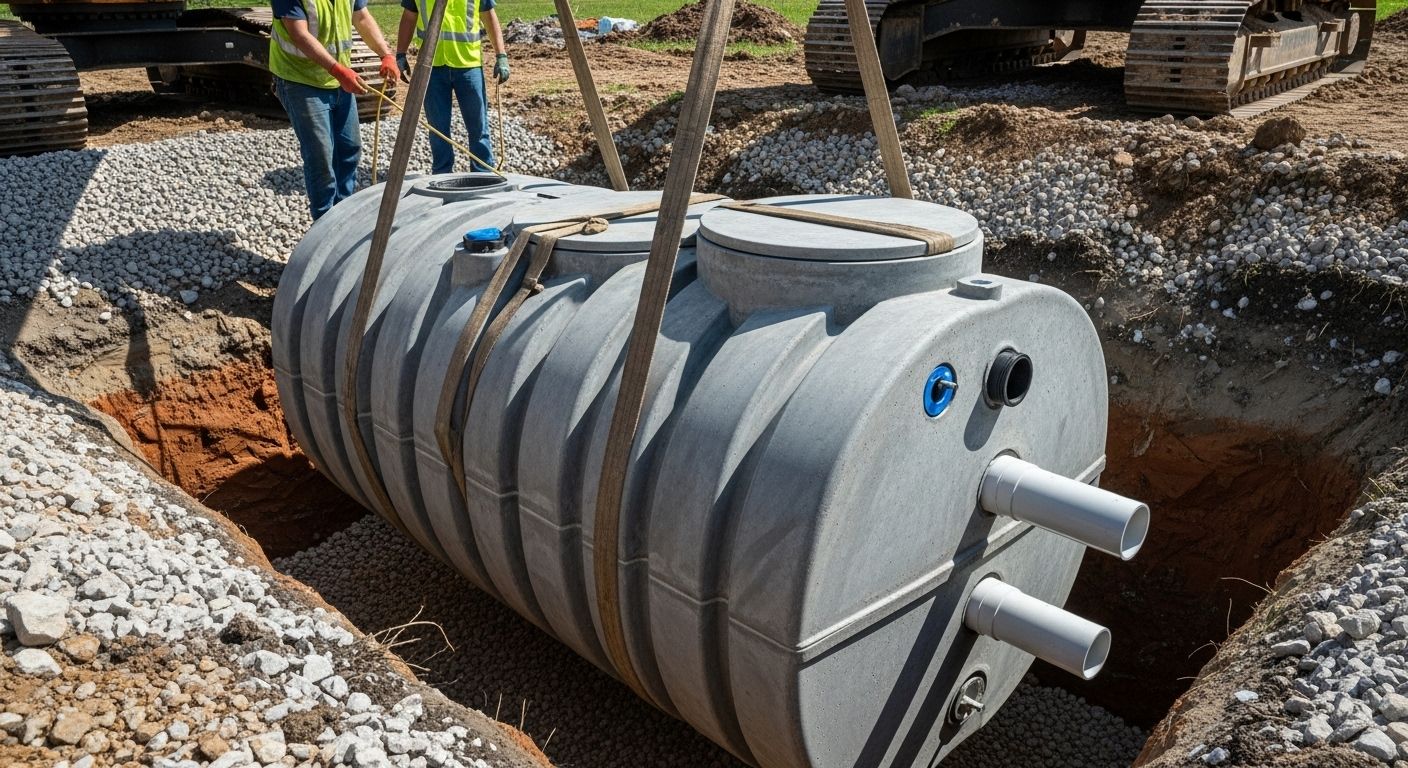
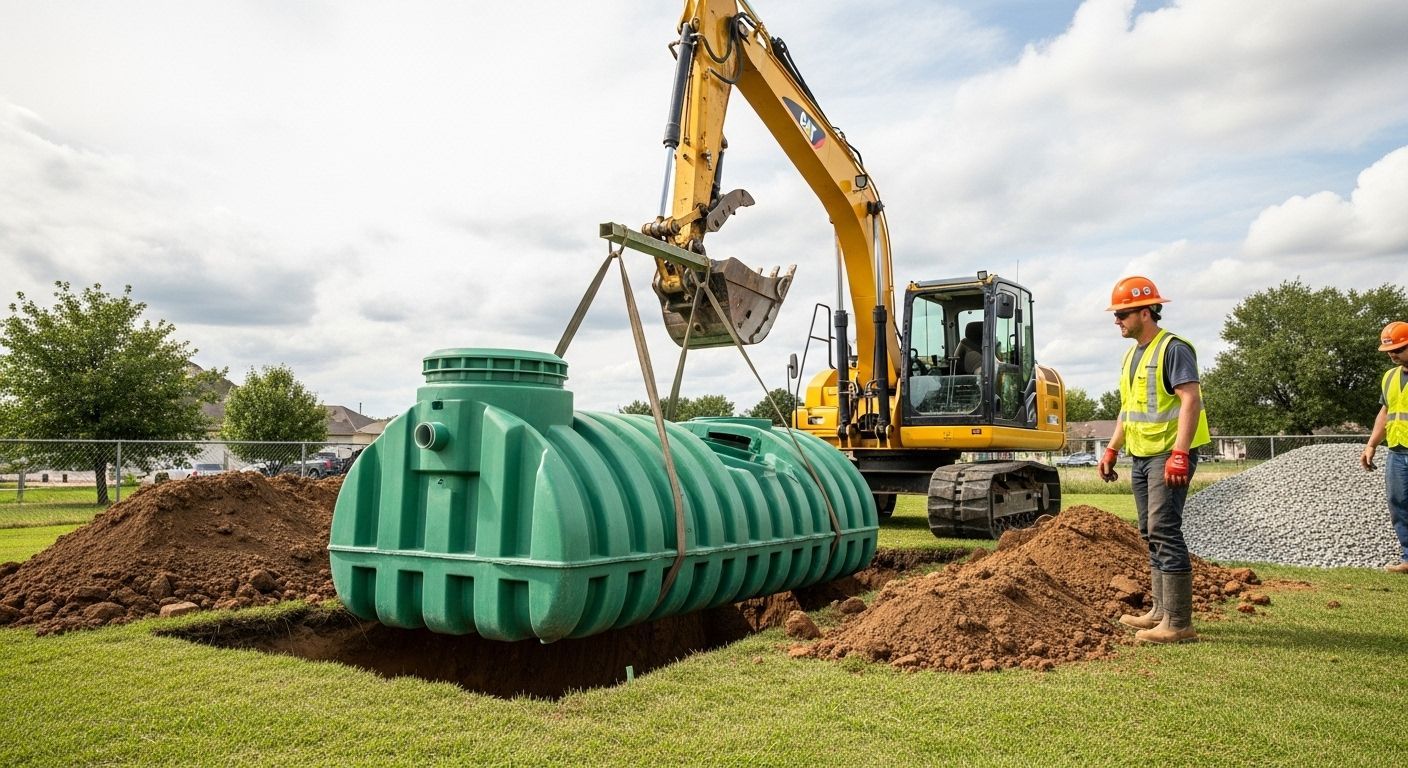
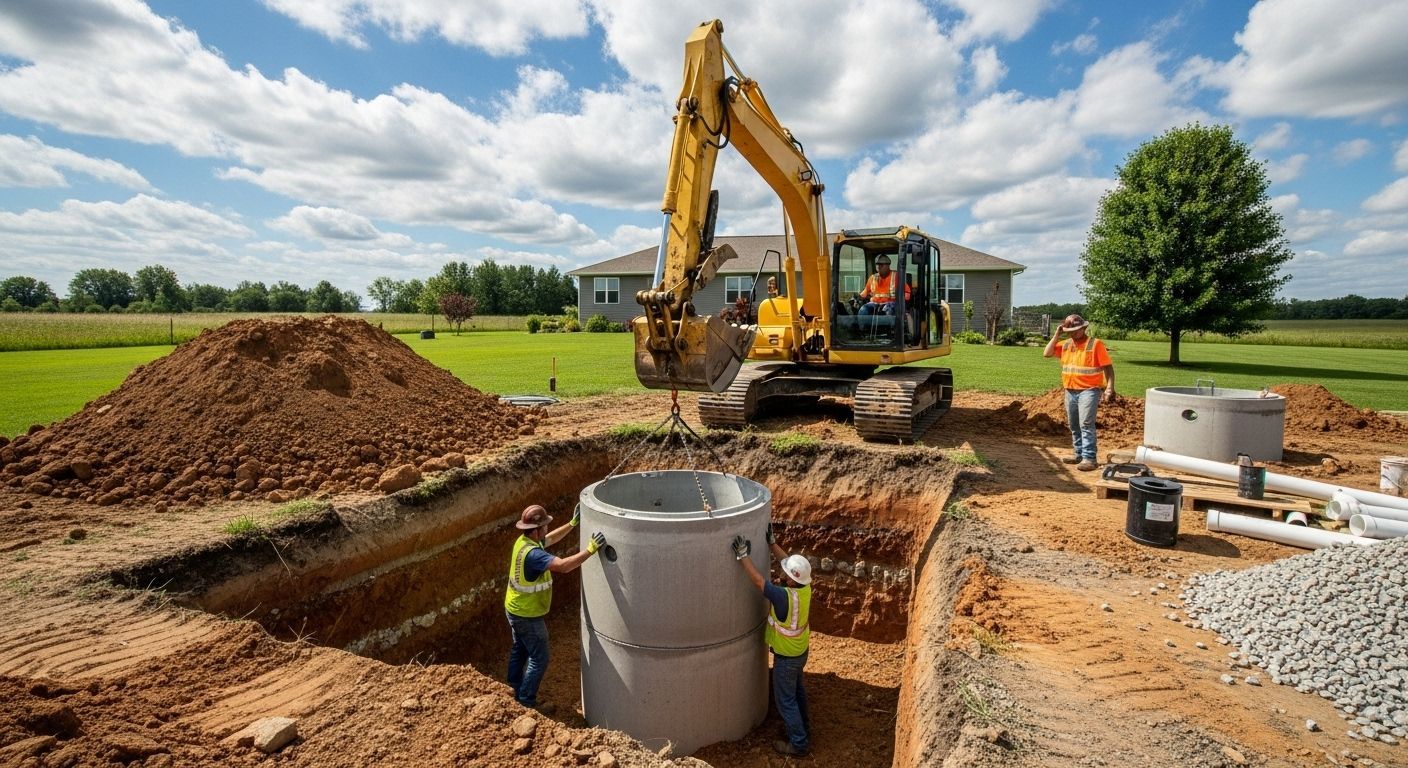
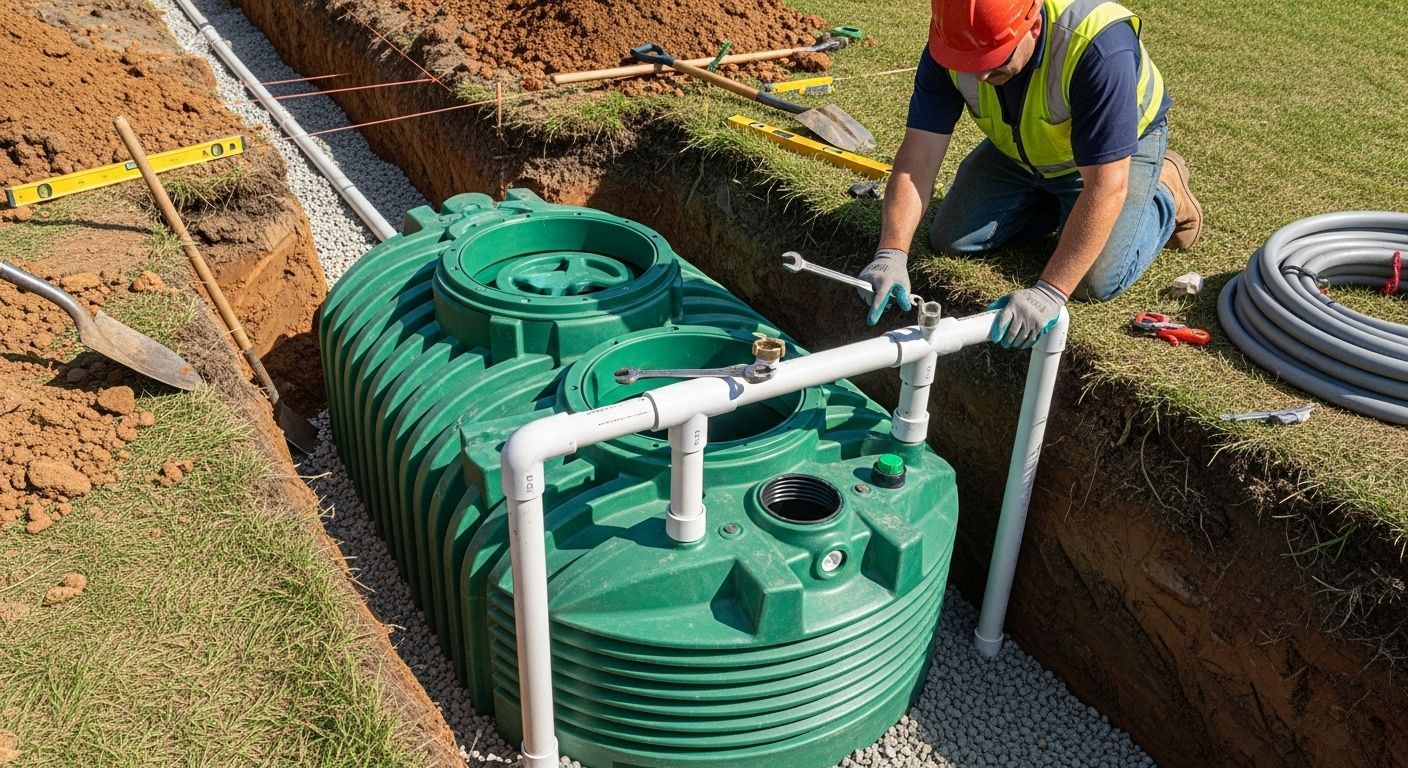
One thing to know: the tank and the drain field are separate. The tank is the buried concrete or fiberglass container where waste settles. The drain field — the series of perforated pipes that distribute treated water into the soil — extends out from the tank, usually in a different direction than the pipe from the house. If you find one, the other isn't far behind.


When to Call a Professional

If the records don't exist and the physical search isn't turning anything up, a septic professional with ground-penetrating radar or electronic locating equipment can usually find the system in under an hour. It's not expensive relative to the cost of digging blindly, and it protects you from accidentally puncturing a tank lid with a shovel.

Once you do find it, mark the location permanently — a small landscaping stake, a note in your phone with measurements from two fixed points on the house, a photo with the GPS coordinates. The next time you need to know how to find your septic tank location, the answer should take thirty seconds, not an afternoon.

And if it's been more than three years since the tank was pumped, finding it is a good reason to schedule that while you're at it.

Septic Tank Installation Near Me?